

Table of Contents
- The Inertia Basket
- The Complexity Basket
- The Good Kind of Complexity
- The Bad Kind of Complexity
- The Really Bad Kind of Complexity
- The Complexity Discount: Putting It All Together
- Testing the Complexity Basket
- The Inertia Basket
Goldman Sachs recently published a basket of “consumer inertia” stocks: companies that benefit when customers keep paying because comparison and switching are annoying. Telecom, insurance, streaming, and travel all contain versions of this dynamic.
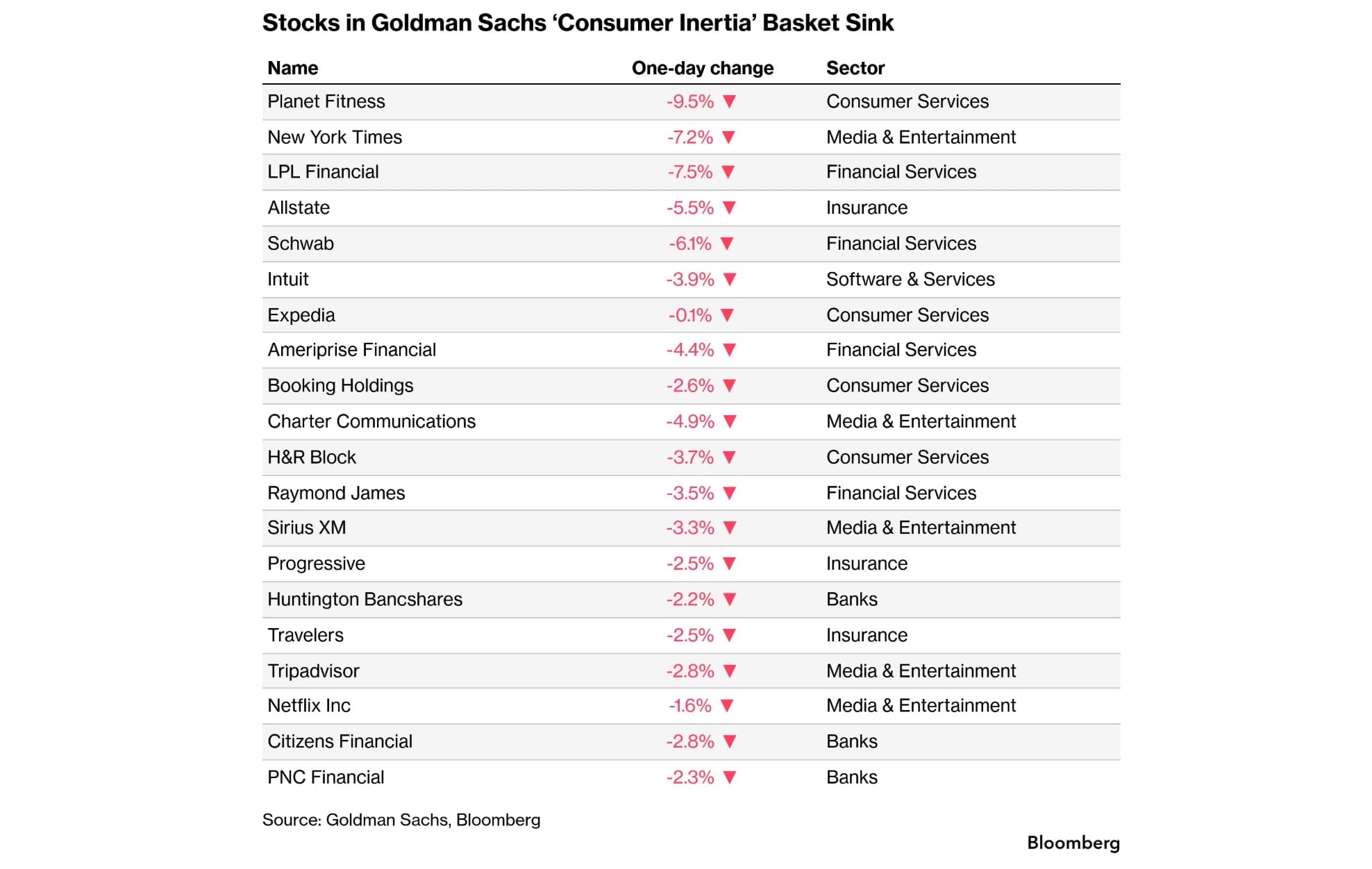
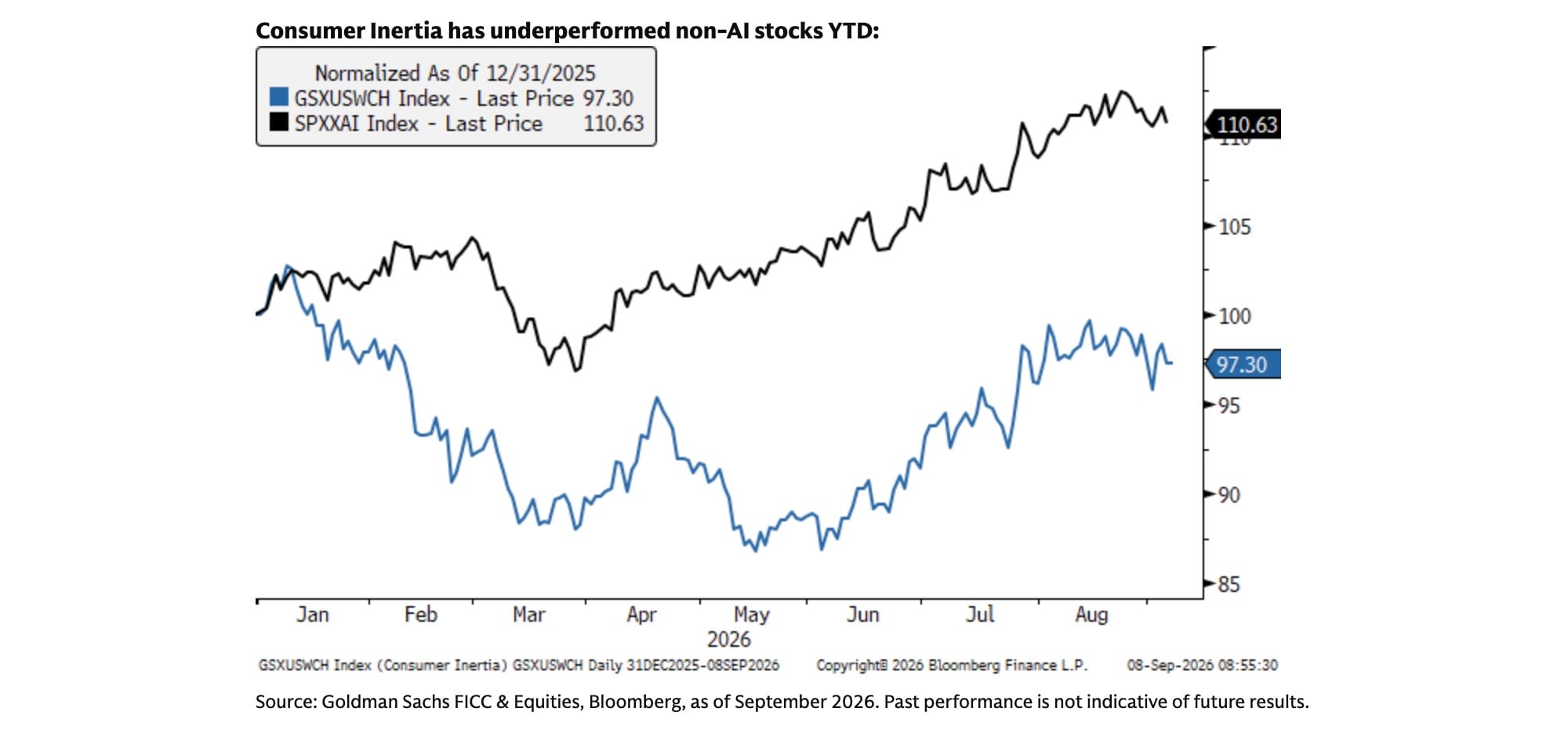
The claim is that AI agents pressurize inertia. Software can continuously compare prices, monitor terms, switch providers, and renegotiate services. Consumer inertia exists, so the argument goes, because people have limited time and attention. Agents reduce that constraint. Does it reduce it that much? Consumer inertia is eternal, so we are doubtful.
Investors, pre-Muse, were already actively punishing inertia names. It has been a quiet and less consequential version of the silly Saaspocalypse, where a class of equities were deemed to be AI-damaged.
- The Complexity Basket
There is an opposite category of companies, however: Ones where friction has worked against the business, rather than helping it. These companies carry what we call a complexity discount. The underlying product can be valuable, differentiated, and difficult to reproduce, but adoption and/or usage remains below its potential because the product is cumbersome to configure, understand or operate.
There are, loosely three kinds of such companies, which we will now walk through.
2a. The Good Kind of Complexity
Consider the case of Cloudflare. The company's global network and security infrastructure are hard to copy, so it has a real moat. But using the product has historically required users to understand DNS, certificates, tunnels, routing, firewall rules, Workers, and access policies.
Most people, us included, likely Cloudflare-checked-out after mastering DNS (domain name servers), if you got that far. While many of the company's other products were no doubt useful, it was too hard for most normals to deploy them, absent hiring expensive sysops and network engineers.
That is no longer the case. Take paulkedrosky.com as an example. It uses a host of Cloudflare services, only some of which we fully understand, but all of which are useful. It uses DNS, caching, tunnels, routing, and Workers (which remain a mystery, but still work wonderfully).
What has changed? AI reduces the complexity burden and exposes more of the value already present. Exposing the value, however, doesn't mean that customers no longer need it. The moat remains; the complexity doesn't. This opens up vast opportunities to, in cringe marketing parlance, do a lot of "up-selling".