

What Happened
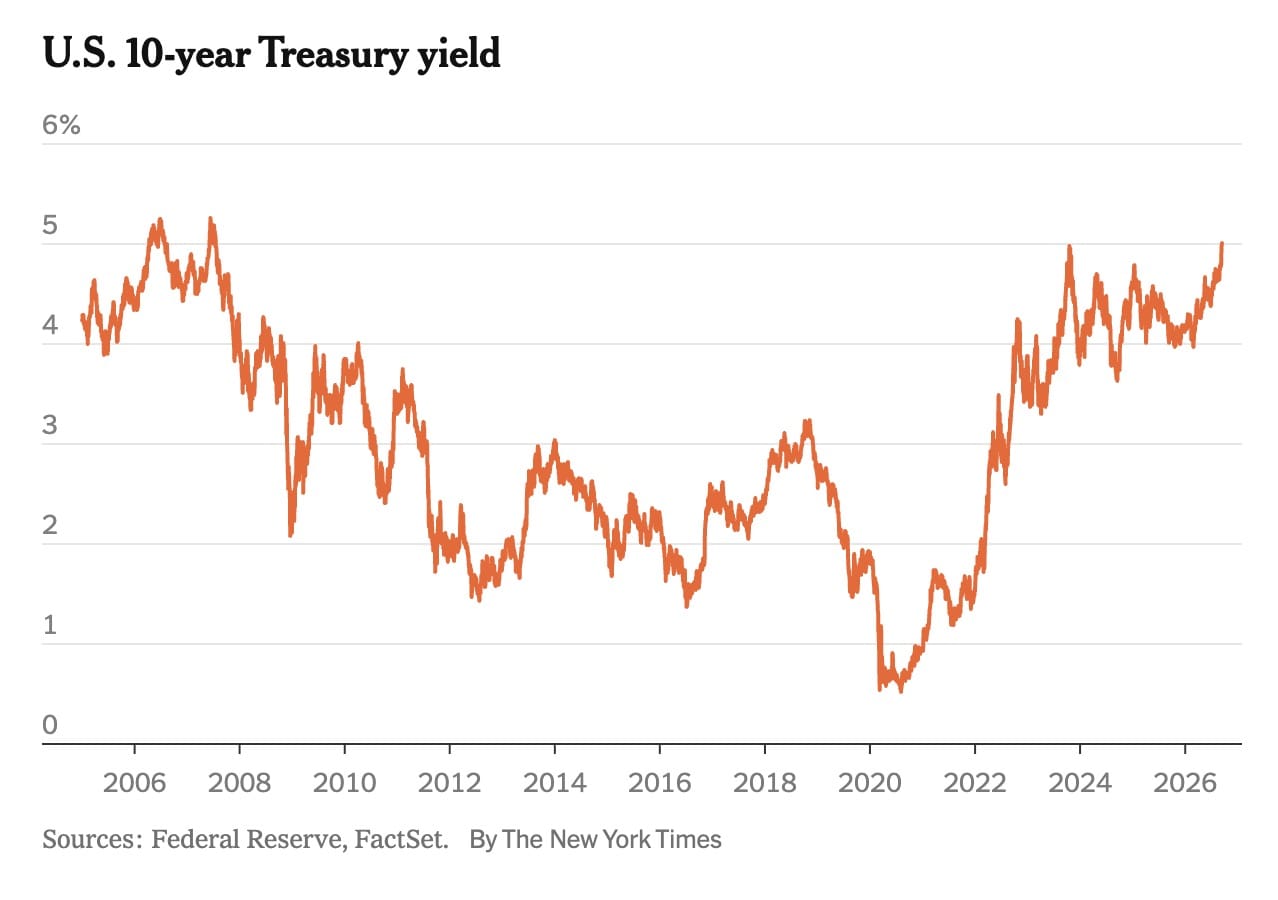
The 10-year Treasury crossed 5% this week, its highest level since 2023. This creates an economic stress test, with consumers pulling money out of stocks, attracted by the secure yield on the 10-year, and low-rate-addicted corporates under increasing stress, especially for data centers, as rates rise.
The AI capex numbers are immense. The Dallas Fed estimates data-center investment at roughly $3 trillion to $5 trillion over the next three to five years. Using a simple scenario of $1 trillion of AI/data-center investment, 70% externally financed, outside financing would total $700 billion.
At an all-in debt cost of 6.5%, annual interest on $700 billion is about $46 billion. At 7.5%, it is about $53 billion. At 9%, it is $63 billion.
There is also a rapidly growing data-center and GPU refinancing schedule ahead: roughly $2.7 billion in 2029, $26 billion in 2030, and $34 billion in 2031, including anticipated refinancing dates, all of which must be done at higher rates.
What It All Means
The AI infrastructure boom is now largely debt-driven, so it is definitionally becoming much more sensitive to its cost of capital. Hyperscalers already have their own de facto spread curves, and it is about to come under stress.
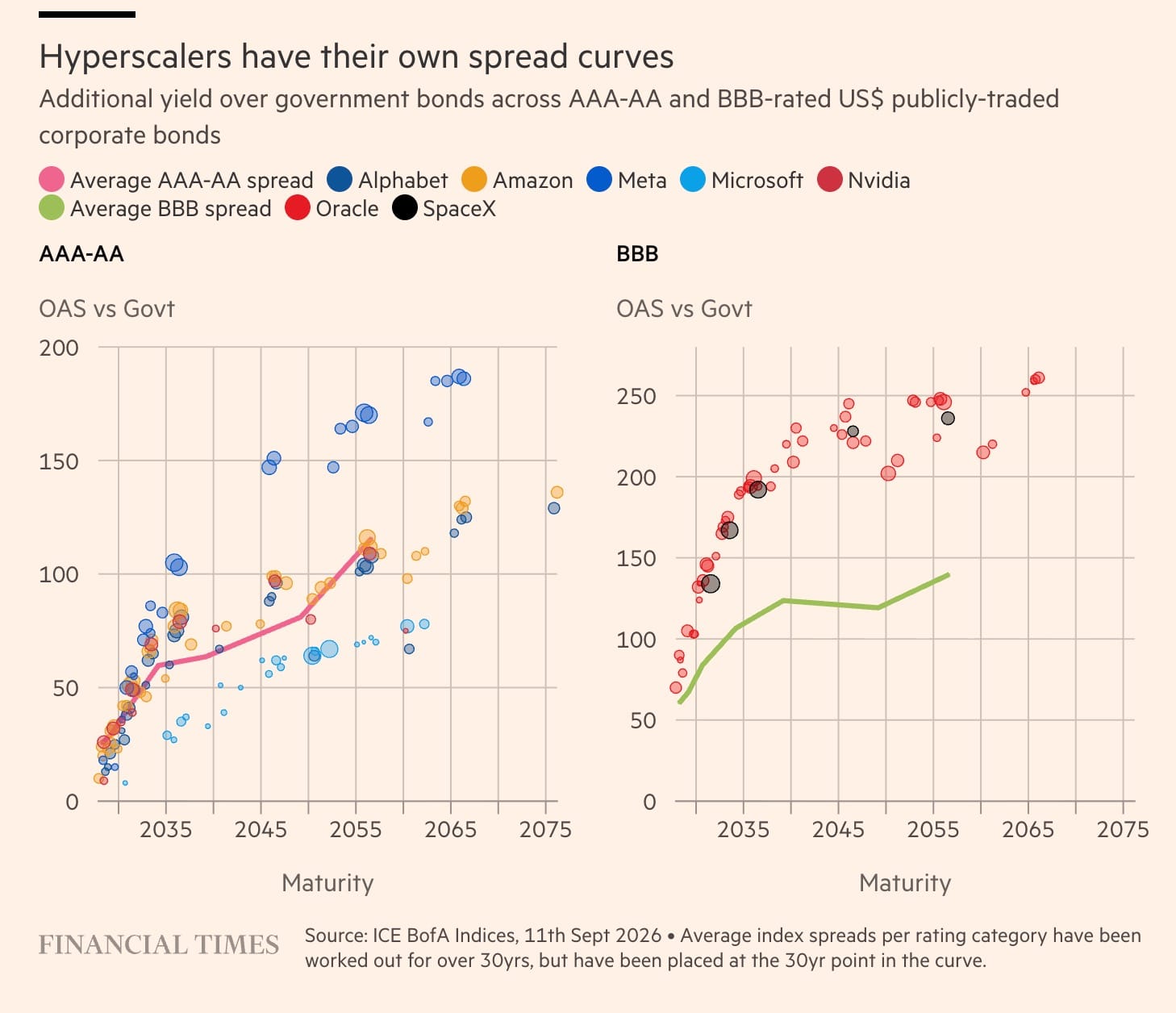
At a newly 5% Treasury yield, new data-center debt has to yield well above 5%, usually at least 150 basis points higher, depending on deal structure and the quality of the borrower.. And every additional 100 basis points on $700 billion of financing adds roughly $7 billion a year in interest expense.