

November 16, 2025 — General
This is a weekly free look of our premium Kedrosky Daily email. If you're not already a subscriber, sign up for a five-day preview.
Two Graphs
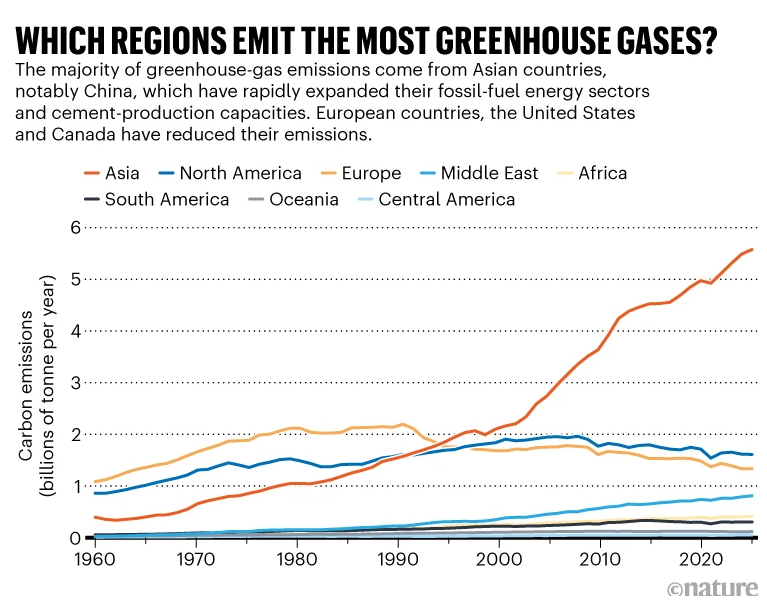
Asia’s greenhouse gas emissions have surged dramatically since 2000, overtaking all other regions and now exceeding the combined emissions of North America and Europe, which have both seen declining trends since around 2005.
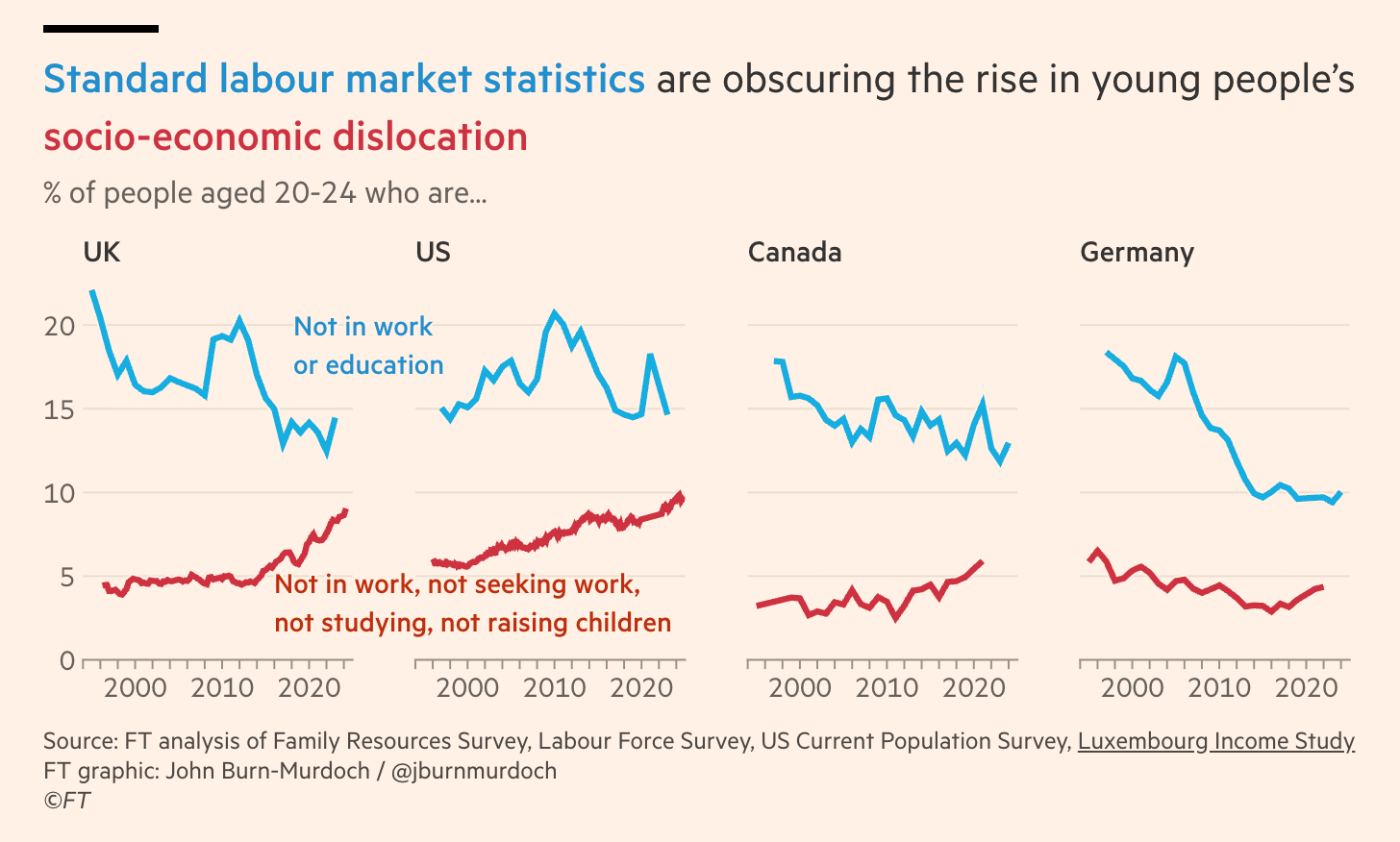
While the share of young people (20–24) not in work or education has fallen or stayed stable in all four countries, the percentage who are completely disconnected—neither working, seeking work, studying, nor raising children—has risen steadily since 2000, particularly in the UK and US.
Headlines
Princeton University Says Database With Donor Info Compromised (Bloomberg) … White House Hunts for Ways to Lower the Cost of Living (WSJ) … U.S. Boat Strikes Are Straining the Counterdrug Alliance (WSJ) … Pop Mart’s Labubu Risks Beanie Baby-Style Collapse, Analyst Says (Bloomberg) … Former Fed Official Violated Trading Rules, Disclosures Show (NY Times) … US economic outlook obscured by shutdown-triggered data gap (FT) … US retailers try to handle change after penny’s demise (FT) … 25 Movies, Many Stars, 0 Hits: Hollywood Falls to New Lows (NY Times) … She Took JPMorgan for $175 Million. That Doesn’t Include Her Restaurant Bills. (NY Times) … Ex-Fed Governor Kugler Faced Ethics Probe Before Resigning (Bloomberg)
The Idea
Mentions: Geopolitical partnerships affecting trade patterns
Geopolitical partners boosting mutual trade cooperation.
With geopolitical tensions rising, countries are increasingly favoring trade with allies over rivals. This shift is causing significant changes in global trade patterns. Countries most exposed to geopolitical tensions will see altered supply chains and trading volumes over the next 6-24 months.
Related reading:
FreightWaves: McKinsey: Geopolitical partners trading more with one another, less with rivals
Financial Times: Welcome to the new age of geoeconomics
Financial Times: Strategic interdependence is rewiring the global economy